

The PAMCET Learning Team is the institutional curriculum and content group behind course publishing on this platform. PAMCET (Professional and Academic Management Centre for Education and Training) is operated by Digitpen Hub Ltd, a company registered in Lagos, Nigeria. Courses credited to the PAMCET Learning Team are structured, organized, and published centrally by the platform rather than authored by a single named individual instructor — each course's syllabus, learning outcomes, and content are reviewed before publication under this institutional account. For questions about a specific course or to report a content issue, please use the platform's Help & Support or Contact Us pages.
Junior Certificate Irish - Complete Preparation
Complete syllabus preparation and practical questions for Junior Certificate Irish.

Course Overview
Complete syllabus preparation and practical questions for Junior Certificate Irish. Curriculum Structure & Core Modules: • 1. Introduction & Foundational Principles • 2. Theoretical Frameworks & Core Concepts • 3. Key Methods, Operations & Techniques • 4. Applications, Models &...
Earn Your Certificate
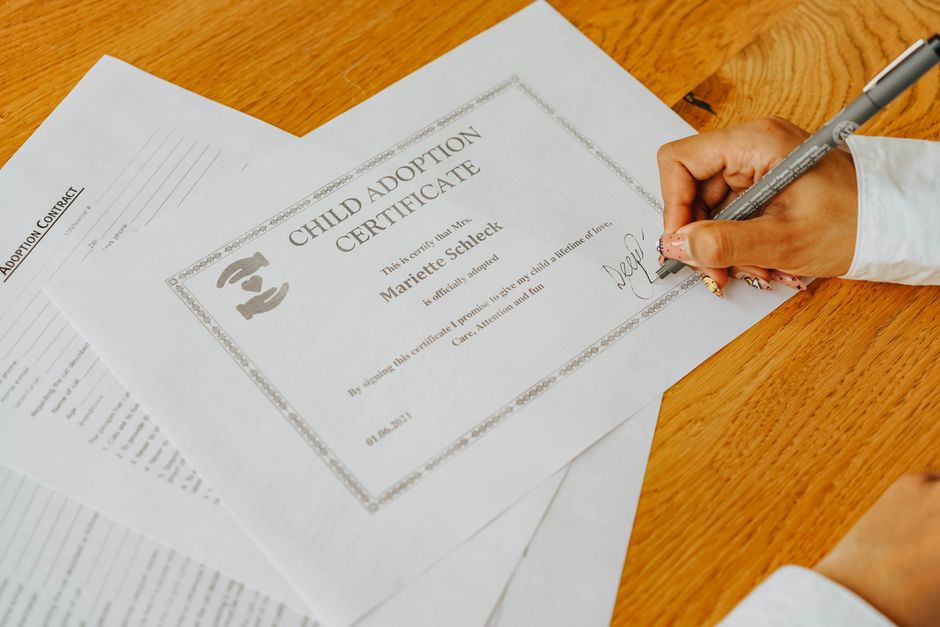
Showcase your skills with a certificate! Complete the course, submit your project, and earn your certificate. Here's a sample of what you'll receive to show off your accomplishments.

Lecture Board & Syllabus
Course Curriculum
Browse complete theoretical foundations, worked calculations, laboratory protocols, and board assessment questions under each topic.
10 Chapters
•30 Lecture
•0s
Subtopic 1Document LectureOpen Access~9 min read
Introduction & Foundational Principles - Concept Explanation & Foundations
Junior Certificate Irish Chapter 1 Sanskrit Phonology: Varna Vibhaga, Svara, Vyanjana, and Articulatory Positions (Sthana & Prayatna) Course: Junior Certificate Irish - Complete Preparation 1. Theoretical Foundation & Core Concepts Classical Sanskrit phonology represents an extraordinary achievement in ancient articulatory phonetics, codified systematically in Panini's Astadhyayi and the Pratishak...
Module 1 • Subtopic 1•7,022 characters of authentic academic content
Subtopic 2Document Lecture
Introduction & Foundational Principles - Worked Examples & Mark Schemes
Junior Certificate Irish Chapter 1 Sanskrit Sandhi Rules: Svara Sandhi (Dirgha, Guna, Vriddhi, Yan, and Ayadi) Course: Junior Certificate Irish - Complete Preparation 1. Theoretical Foundation & Core Concepts Sandhi (euphonic sound combination) is the compulsory morphophonological modification that occurs at morpheme boundaries within a word (Internal Sandhi) or between adjacent words in a sentenc...
Module 1 • Subtopic 2
Subtopic 3Document Lecture
Introduction & Foundational Principles - Practice Questions & Examiner Insights
Junior Certificate Irish Chapter 1 Sanskrit Sandhi Rules: Vyanjana Sandhi (Consonant) and Visarga Sandhi Operations Course: Junior Certificate Irish - Complete Preparation 1. Theoretical Foundation & Core Concepts Vyanjana Sandhi (Consonantal Sandhi) and Visarga Sandhi govern the euphonic mutations that occur when words ending in consonants or the visarga (-h) interact with initial sounds of follo...
Module 1 • Subtopic 3
Subtopic 1Document Lecture
Theoretical Frameworks & Core Concepts - Concept Explanation & Foundations
Junior Certificate Irish Chapter 2 Sanskrit Nominal Morphology: Subanta Case System, Vibhakti, Linga, and Declension Classes Course: Junior Certificate Irish - Complete Preparation 1. Theoretical Foundation & Core Concepts Sanskrit nominal inflection (Subanta) is one of the most richly developed synthetic morphological systems among inflected ancient languages. Every nominal stem (Pratipadika) inf...
Module 2 • Subtopic 1
Subtopic 2Document Lecture
Theoretical Frameworks & Core Concepts - Worked Examples & Mark Schemes
Junior Certificate Irish Chapter 2 Sanskrit Verbal System: Tinganta Dhatu Conjugations Across Ten Lakaras and Three Padas Course: Junior Certificate Irish - Complete Preparation 1. Theoretical Foundation & Core Concepts The Sanskrit verbal system (Tinganta) is organized around verbal roots (Dhatu), which are cataloged into ten Conjugational Classes (Gana) in the Dhatupatha. Verbal roots express vo...
Module 2 • Subtopic 2
Subtopic 3Document Lecture
Theoretical Frameworks & Core Concepts - Practice Questions & Examiner Insights
Junior Certificate Irish Chapter 2 Sanskrit Compound Formations: Samasa Architecture and the Six Canonical Classes Course: Junior Certificate Irish - Complete Preparation 1. Theoretical Foundation & Core Concepts Samasa (nominal compounding) is the defining architectural feature of classical Sanskrit style, allowing multiple syntactic words to fuse into a single euphonic lexical unit with only the...
Module 2 • Subtopic 3
Subtopic 1Document Lecture
Key Methods, Operations & Techniques - Concept Explanation & Foundations
Junior Certificate Irish Chapter 3 Sanskrit Syntax & Karaka Theory: Syntactic Roles from Nominative to Dative Course: Junior Certificate Irish - Complete Preparation 1. Theoretical Foundation & Core Concepts Panini's Karaka Theory is a profound semantic-syntactic model that mediates between real-world actions, cognitive participant roles (Karaka), and surface morphological case endings (Vibhakti)....
Module 3 • Subtopic 1
Subtopic 2Document Lecture
Key Methods, Operations & Techniques - Worked Examples & Mark Schemes
Junior Certificate Irish Chapter 3 Sanskrit Syntax: Ablative, Genitive, and Locative Syntactic Dependencies and Upapada Rules Course: Junior Certificate Irish - Complete Preparation 1. Theoretical Foundation & Core Concepts The remaining cases in the Sanskrit syntactic system govern source, relational possession, and spatiotemporal locus: (1) Apadana (Ablative - 'Dhruvam Apaye 'padanam' 1.4.24): t...
Module 3 • Subtopic 2
Subtopic 3Document Lecture
Key Methods, Operations & Techniques - Practice Questions & Examiner Insights
Junior Certificate Irish Chapter 3 Classical Sanskrit Literature: Epics, Kavya Aesthetics, Kalidasa, and Dramatic Conventions Course: Junior Certificate Irish - Complete Preparation 1. Theoretical Foundation & Core Concepts Classical Sanskrit literature represents one of the world's most sophisticated aesthetic traditions, dividing historically into the archaic Itihasa (Epic chronicles: Valmiki's...
Module 3 • Subtopic 3
Subtopic 1Document Lecture
Applications, Models & Problem Solving - Concept Explanation & Foundations
Junior Certificate Irish Chapter 4 Hindi Vyakaran: Varna Vichar, Devanagari Orthography, Svar, Vyanjan, and Phonetic Classification Course: Junior Certificate Irish - Complete Preparation 1. Theoretical Foundation & Core Concepts Hindi Vyakaran (Hindi grammar) establishes the scientific foundation of Modern Standard Hindi (Manak Hindi), written in the Devanagari script. Devanagari is an alphasylla...
Module 4 • Subtopic 1
Subtopic 2Document Lecture
Applications, Models & Problem Solving - Worked Examples & Mark Schemes
Junior Certificate Irish Chapter 4 Hindi Morphology: Sangya (Noun Types), Ling (Gender Rules), and Vachan (Pluralization) Course: Junior Certificate Irish - Complete Preparation 1. Theoretical Foundation & Core Concepts Hindi nominal morphology categorizes nouns (Sangya) into three primary classes: (1) Vyaktivacak Sangya (Proper Nouns: specific individuals, places, monuments, rivers, e.g., Ram, Di...
Module 4 • Subtopic 2
Subtopic 3Document Lecture
Applications, Models & Problem Solving - Practice Questions & Examiner Insights
Junior Certificate Irish Chapter 4 Hindi Pronominal & Adjectival Systems: Sarvanam Categories and Visheshan Concord Course: Junior Certificate Irish - Complete Preparation 1. Theoretical Foundation & Core Concepts Pronouns (Sarvanam) in Hindi substitute for nouns across six grammatical categories: (1) Purushvacak (Personal: 1st person Uttam Purush: maiñ/ham; 2nd person Madhyam Purush: tu [intimate...
Module 4 • Subtopic 3
Subtopic 1Document Lecture
Intermediate Case Studies & Calculations - Concept Explanation & Foundations
Junior Certificate Irish Chapter 5 Hindi Verbal Morphology: Kriya (Transitivity), Kal (Tense-Aspect), and Vachya (Voice) Course: Junior Certificate Irish - Complete Preparation 1. Theoretical Foundation & Core Concepts The Hindi verbal system is built upon the verbal root (Dhatu), from which infinitives are formed by adding '-na' (padh -> padhna = to read; kha -> khana = to eat). Verbs are categor...
Module 5 • Subtopic 1
Subtopic 2Document Lecture
Intermediate Case Studies & Calculations - Worked Examples & Mark Schemes
Junior Certificate Irish Chapter 5 Hindi Karak System: Case Markers (Prasarg), Ergative Alignment (Ne), and Case Roles Course: Junior Certificate Irish - Complete Preparation 1. Theoretical Foundation & Core Concepts The Hindi Karak system defines the syntactic and semantic relationships between nouns/pronouns and the main verb, mediated by postpositions (Prasarg or Vibhakti Chinh). Hindi recogniz...
Module 5 • Subtopic 2
Subtopic 3Document Lecture
Intermediate Case Studies & Calculations - Practice Questions & Examiner Insights
Junior Certificate Irish Chapter 5 Hindi Derivational Morphology: Upasarg (Prefixes), Pratyay (Suffixes), and Sandhi Combinations Course: Junior Certificate Irish - Complete Preparation 1. Theoretical Foundation & Core Concepts Hindi word formation (Shabd Rachna) enriches vocabulary through three primary structural mechanisms: Upasarg (Prefixes), Pratyay (Suffixes), and Sandhi. UPASARG are bound m...
Module 5 • Subtopic 3
Formative Assessment10 Points • 15 Mins
Mid-Course Progress Assessment
Assessment Protocol:10 Total Points•70% Passing Threshold•15 Mins Time Limit•Bloom's Taxonomy: Analyze & Evaluate
Verify your knowledge of Creative Narrative Composition & Mechanics.
Module 5 • Formative Assessment
Subtopic 1Document Lecture
System Interactions & Advanced Dynamics - Concept Explanation & Foundations
Junior Certificate Irish Chapter 6 Hindi Syntax: Vakya Bhed, Pad-Parichay (Syntactic Parsing), and Vakya Shuddhi Course: Junior Certificate Irish - Complete Preparation 1. Theoretical Foundation & Core Concepts Hindi syntax governs the hierarchical organization of words into phrases and sentences, traditionally adhering to canonical Subject-Object-Verb (SOV) linear word order. Sentences are classi...
Module 6 • Subtopic 1
Subtopic 2Document Lecture
System Interactions & Advanced Dynamics - Worked Examples & Mark Schemes
Junior Certificate Irish Chapter 6 Hindi Rhetoric & Poetics: Alankar Taxonomy (Shabdalankar vs Arthalankar) and Figurative Analysis Course: Junior Certificate Irish - Complete Preparation 1. Theoretical Foundation & Core Concepts Alankar (poetic embellishment/ornamentation) represents the classical aesthetic framework of Indian poetics (Kavyashastra), famously codified by Bhamaha, Dandin, and Mamm...
Module 6 • Subtopic 2
Subtopic 3Document Lecture
System Interactions & Advanced Dynamics - Practice Questions & Examiner Insights
Junior Certificate Irish Chapter 6 Hindi Idiomatic Lexicon: Muhavare, Lokoktiyan, and Sociocultural Metaphor Analysis Course: Junior Certificate Irish - Complete Preparation 1. Theoretical Foundation & Core Concepts The idiomatic richness of Hindi is embodied in its vast treasury of Muhavare (Idioms) and Lokoktiyan (Proverbs / Folk Aphorisms). A MUHAVARA is an incomplete, phrasal figure of speech...
Module 6 • Subtopic 3
Subtopic 1Document Lecture
Critical Analysis & Comparative Theories - Concept Explanation & Foundations
Junior Certificate Irish Chapter 7 Modern Hindi Literature: Munshi Premchand, Social Realism, and the Evolution of Hindi Prose Course: Junior Certificate Irish - Complete Preparation 1. Theoretical Foundation & Core Concepts The trajectory of modern Hindi literature is profoundly defined by MUNSHI PREMCHAND (1880–1936), revered as the 'Upanyas Samrat' (Emperor of Novels) and the pioneer of Social...
Module 7 • Subtopic 1
Subtopic 2Document Lecture
Critical Analysis & Comparative Theories - Worked Examples & Mark Schemes
Junior Certificate Irish Chapter 7 Irish Phonology: Consonant Palatalization, Broad vs Slender (Caol le Caol agus Leathan le Leathan) Course: Junior Certificate Irish - Complete Preparation 1. Theoretical Foundation & Core Concepts Modern Irish (Gaeilge) phonology is structurally defined by a universal phonemic contrast between two complete parallel sets of consonants: Broad Consonants (Consain Le...
Module 7 • Subtopic 2
Subtopic 3Document Lecture
Critical Analysis & Comparative Theories - Practice Questions & Examiner Insights
Junior Certificate Irish Chapter 7 Irish Initial Mutations: Lenition (Séimhiú) Triggers, Consonant Alterations, and Syntactic Rules Course: Junior Certificate Irish - Complete Preparation 1. Theoretical Foundation & Core Concepts Initial Mutation (Claochlú Tosaigh) is the hallmark grammatical feature of Insular Celtic languages, where the initial consonant of a word undergoes systematic phonetic a...
Module 7 • Subtopic 3
Subtopic 1Document Lecture
Practical Skills, Lab Interpretations & Portfolio Work - Concept Explanation & Foundations
Junior Certificate Irish Chapter 8 Irish Initial Mutations: Eclipsis (Urú) Triggers, Phonetic Sandhi, and Orthographic Conventions Course: Junior Certificate Irish - Complete Preparation 1. Theoretical Foundation & Core Concepts The second foundational initial mutation in Irish is ECLIPSIS (Urú / Nascadh), which voices voiceless stops and nasalizes voiced stops. Phonetically, eclipsis replaces a c...
Module 8 • Subtopic 1
Subtopic 2Document Lecture
Practical Skills, Lab Interpretations & Portfolio Work - Worked Examples & Mark Schemes
Junior Certificate Irish Chapter 8 Irish Nominal Morphology: An t-Ainmfhocal, Grammatical Gender, and Declension Classes Course: Junior Certificate Irish - Complete Preparation 1. Theoretical Foundation & Core Concepts Irish nominal morphology categorizes all nouns (Ainmfhocail) into two grammatical genders: Ffireann (Masculine) and Baininscneach (Feminine); Irish has no neuter gender. Gender assi...
Module 8 • Subtopic 2
Subtopic 3Document Lecture
Practical Skills, Lab Interpretations & Portfolio Work - Practice Questions & Examiner Insights
Junior Certificate Irish Chapter 8 Irish Genitive Case: An Tuiseal Ginideach, Compound Nouns, and Possessive Syntagms Course: Junior Certificate Irish - Complete Preparation 1. Theoretical Foundation & Core Concepts The Genitive Case (An Tuiseal Ginideach) in Irish governs nominal relationships of possession, composition, origin, and verbal subordination. Unlike English, which utilizes possessive...
Module 8 • Subtopic 3
Subtopic 1Document Lecture
Exam Preparation, Revision & Mock Testing - Concept Explanation & Foundations
Junior Certificate Irish Chapter 9 Irish Prepositions: Simple Forms, Leniting/Eclipsing Triggers, and Prepositional Pronouns Course: Junior Certificate Irish - Complete Preparation 1. Theoretical Foundation & Core Concepts Prepositions in Irish divide into Simple Prepositions (Réamhfhocail Shimplí) and Compound Prepositions (Réamhfhocail Chónasctha / Réamhfhocail Chrua). Simple prepositions govern...
Module 9 • Subtopic 1
Subtopic 2Document Lecture
Exam Preparation, Revision & Mock Testing - Worked Examples & Mark Schemes
Junior Certificate Irish Chapter 9 Irish Verbal System: Regular Conjugations (Céad & Dara Réimniú) Across the Tenses Course: Junior Certificate Irish - Complete Preparation 1. Theoretical Foundation & Core Concepts The Irish regular verbal system is organized into Two Main Conjugations (Dá Réimniú): (1) First Conjugation (An Chéad Réimniú): verbs consisting of one syllable (e.g., dún = close, glan...
Module 9 • Subtopic 2
Subtopic 3Document Lecture
Exam Preparation, Revision & Mock Testing - Practice Questions & Examiner Insights
Junior Certificate Irish Chapter 9 Irish Irregular Verbs: Na hAon Déag Briathra Neamhrialta Across Declarative and Dependent Forms Course: Junior Certificate Irish - Complete Preparation 1. Theoretical Foundation & Core Concepts While regular Irish verbs exhibit great morphological consistency, the core operational vitality of the language resides in its Eleven Irregular Verbs (Na hAon Déag Briath...
Module 9 • Subtopic 3
Subtopic 1Document Lecture
Full Examination Challenge & Synthesis - Concept Explanation & Foundations
Junior Certificate Irish Chapter 10 Irish Conditional Mood: An Modh Coinníollach, Hypothetical Structures, and Politeness Markers Course: Junior Certificate Irish - Complete Preparation 1. Theoretical Foundation & Core Concepts The Conditional Mood (An Modh Coinníollach) in Irish expresses hypothetical actions, unfulfilled conditions, polite requests, and past habitual actions. Morphologically, th...
Module 10 • Subtopic 1
Subtopic 2Document Lecture
Full Examination Challenge & Synthesis - Worked Examples & Mark Schemes
Junior Certificate Irish Chapter 10 Irish Prose & Literary Heritage: The Revival, Pádraic Ó Conaire, and Máirtín Ó Cadhain Course: Junior Certificate Irish - Complete Preparation 1. Theoretical Foundation & Core Concepts Modern Irish prose literature emerged through the Gaelic Revival (Athbheochan na Gaeilge) at the turn of the 20th century, catalyzed by the founding of Conradh na Gaeilge (The Gae...
Module 10 • Subtopic 2
Subtopic 3Document Lecture
Full Examination Challenge & Synthesis - Practice Questions & Examiner Insights
Junior Certificate Irish Chapter 10 Comparative Classical & National Philology: Translation Methodology and Linguistic Preservation Course: Junior Certificate Irish - Complete Preparation 1. Theoretical Foundation & Core Concepts Comparative philology demonstrates that classical and national languages—such as Sanskrit, Hindi, and Irish—share profound structural affinities as branches of the wider...
Module 10 • Subtopic 3
Formative Assessment10 Points • 15 Mins
Comprehensive End-of-Course Examination
Assessment Protocol:10 Total Points•70% Passing Threshold•15 Mins Time Limit•Bloom's Taxonomy: Analyze & Evaluate
Verify your knowledge of Full English Mock & Composition Exam.
Module 10 • Formative Assessment
Academic Ecosystem & Connected Pathways
Deepen your studies across connected learning pathways in the PAMCET academic network:
Digital Research Library16,000+ open-access monographs & textbooks
Structured Learning PathsCurated multi-course career specializations
WAEC / SSCE Examination HubComplete secondary school syllabus & mock tests
JAMB / UTME PreparationComputer-based tests & scoring analytics
Tertiary & University Hub100L - 400L degree benchmark modules
Credential Verification PortalInstant cryptographic certificate authentication
Instructor
PAMCET Learning Team
Institutional Course Curation · PAMCET
Qualifications:
PAMCET Learning Team — Institutional Course Curation, Digitpen Hub LtdMy Skills:
- Curriculum Curation
- Course Content Review
- Learning Outcome Design
- Course Publishing & Quality Assurance
- Platform Content Operations
Reviews
No reviews available
Free100% Off
Certificate available separately for $7 after completionCourse Includes
10 Chapters
30 Lectures
1 week
Skill Level beginner
Taught in English
Lifetime Access
Certification of Completion
Category: Ireland Junior Certificate - Irish
Share On
Download Syllabus & Study Guide
Receive the full lecture syllabus, reading list, and milestone schedule for Junior Certificate Irish - Complete Preparation.
By submitting, you agree to receive educational updates. You can unsubscribe anytime. Read our Privacy Policy.