

The PAMCET Learning Team is the institutional curriculum and content group behind course publishing on this platform. PAMCET (Professional and Academic Management Centre for Education and Training) is operated by Digitpen Hub Ltd, a company registered in Lagos, Nigeria. Courses credited to the PAMCET Learning Team are structured, organized, and published centrally by the platform rather than authored by a single named individual instructor — each course's syllabus, learning outcomes, and content are reviewed before publication under this institutional account. For questions about a specific course or to report a content issue, please use the platform's Help & Support or Contact Us pages.
B.Sc. DegreeFaculty of Faculty of Social Sciences & MediaMass Communication
Broadcast Journalism I
Master Broadcast Journalism I in University - Mass Communication with this structured course, covering 8 modules and practice assessments.

Course Overview
Master Broadcast Journalism I in University - Mass Communication with this structured course, covering 8 modules and practice assessments. Curriculum Structure & Core Modules: • 1. The Nature, Evolution, and Epistemology of Broadcast Journalism • 2. Writing for the Ear:...
What You'll Learn
- Understand and apply the principles of Foundations of Broadcast Journalism
- Work confidently through Writing for Radio News and its practical applications
- Analyse real-world scenarios involving Writing for Television News
- Develop applied skills in Voice and Delivery for Broadcast
- Critically evaluate approaches to Broadcast News Production Process
Requirements
- A foundational understanding of University - Mass Communication concepts, from an introductory course or equivalent experience
- A computer, tablet or smartphone with a stable internet connection
- Willingness to commit regular study time to complete lessons, quizzes and assignments
Degree Programme Curriculum Context
This course is a curriculum unit of the B.Sc. Mass Communication degree framework in Nigeria.
Earn Your Certificate
Showcase your skills with a certificate! Complete the course, submit your project, and earn your certificate. Here's a sample of what you'll receive to show off your accomplishments.

Lecture Board & Syllabus
Course Curriculum
Browse complete theoretical foundations, worked calculations, laboratory protocols, and board assessment questions under each topic.
8 Chapters
•24 Lecture
•0s
Subtopic 1Document Lecture
Aural and Visual Epistemology: Radio and Television as Immediacy-Driven News Media
Aural and Visual Epistemology: Radio and Television as Immediacy-Driven News Media Broadcast journalism represents a radical departure from the print tradition in both cognitive engagement and sensory architecture. While print media relies on visual deciphering of static typographic symbols—demanding active literacy, sustained cognitive pacing, and retrospective contemplation—broadcasting operates...
Module 1 • Subtopic 1
Subtopic 2Document Lecture
Historical Evolution of Broadcasting in Nigeria: From Radio Distribution Services to Deregulation Decree 38 of 1992
Historical Evolution of Broadcasting in Nigeria: From Radio Distribution Services to Deregulation Decree 38 of 1992 The historiography of broadcasting in Nigeria reflects the broader socio-political evolution of the Nigerian state: originating as an instrument of British imperial administrative hegemony, transforming into a partisan ideological battleground during the First Republic, consolidating...
Module 1 • Subtopic 2
Subtopic 3Document Lecture
Structural Architecture of Broadcast Stations: Newsroom Hierarchy, Master Control Room, and Transmission Lines
Structural Architecture of Broadcast Stations: Newsroom Hierarchy, Master Control Room, and Transmission Lines A broadcast station is an industrial techno-journalistic apparatus where editorial intellectual labor is continuously converted into real-time electromagnetic radio frequency (RF) signals or IP packet streams. Unlike print news organizations—where editorial content is decoupled from distr...
Module 1 • Subtopic 3
Subtopic 1Document Lecture
Conversational Syntax and Writing for the Ear: The Inverted Triangle vs Narrative Broadcast Sequences
Conversational Syntax and Writing for the Ear: The Inverted Triangle vs Narrative Broadcast Sequences The foundational discipline of broadcast journalism rests on the recognition that writing for the ear is an entirely distinct linguistic craft from writing for the eye. In print journalism, the writer operates within a visual-spatial medium where the reader can re-read sentences, scrutinize punctu...
Module 2 • Subtopic 1
Subtopic 2Document Lecture
Broadcast Grammar, Phonetics, and Pronunciation Guides: Numbers, Abbreviations, and Attribution Protocols
Broadcast Grammar, Phonetics, and Pronunciation Guides: Numbers, Abbreviations, and Attribution Protocols Broadcast news copy is an operational script intended for vocal performance under high-pressure live conditions. Unlike a printed book or newspaper article—where the text is consumed visually by the reader—a broadcast script is an ergonomic tool engineered to guide a news presenter's eyes, voi...
Module 2 • Subtopic 2
Subtopic 3Document Lecture
Lead Formations in Radio and TV: Soft Leads, Umbrella Leads, Throwaway Leads, and Delayed Identifications
Lead Formations in Radio and TV: Soft Leads, Umbrella Leads, Throwaway Leads, and Delayed Identifications The lead paragraph (or "lede") of a broadcast news story carries immense operational responsibility. In commercial and public service broadcasting, audience attention is volatile: listeners in automobiles can effortlessly change the radio station at the press of a steering-wheel button, and te...
Module 2 • Subtopic 3
Subtopic 1Document Lecture
Acoustic Storytelling: Sound Bites (Actualities), Natural Sound, and Ambient Audio Textures
Acoustic Storytelling: Sound Bites (Actualities), Natural Sound, and Ambient Audio Textures Radio journalism is an art of acoustic architecture. Stripped of the visual crutches of print photography and television video, the radio reporter must construct a vivid, three-dimensional reality in the listener’s mind using only sound. This discipline—known as acoustic storytelling—operates at the interse...
Module 3 • Subtopic 1
Subtopic 2Document Lecture
The Radio News Package: Structuring the Voicer, Wrap-Around, Cue Sheets, and Out-Cues
The Radio News Package: Structuring the Voicer, Wrap-Around, Cue Sheets, and Out-Cues In broadcast radio station operations, news bulletins are constructed from modular editorial units. While a 5-minute hourly newscast may include brief anchor-read copy (readers) and isolated sound bites (actualities), in-depth beat reporting and investigative journalism rely on the Radio News Package. The package...
Module 3 • Subtopic 2
Subtopic 3Document Lecture
Field Audio Recording Mechanics: Microphone Polar Patterns, Pop Filters, Wind Protection, and Digital Audio Workstations
Field Audio Recording Mechanics: Microphone Polar Patterns, Pop Filters, Wind Protection, and Digital Audio Workstations The technical quality of broadcast audio is not an afterthought; it is the fundamental medium through which journalistic meaning is communicated. While human listeners possess remarkable cognitive capacity to tolerate grainy, low-resolution video images, their tolerance for poor...
Module 3 • Subtopic 3
Subtopic 1Document Lecture
Visual Grammar and Shot Sequencing: Establishing Shots, Cutaways, Reverse Angles, and the 180-Degree Rule
Visual Grammar and Shot Sequencing: Establishing Shots, Cutaways, Reverse Angles, and the 180-Degree Rule Television news is a dual-channel cognitive medium where visual imagery and spoken words operate in continuous semiotic dialogue. While radio journalism relies entirely on acoustic description to evoke mental imagery, television journalism presents actual visual evidence directly to the eye. H...
Module 4 • Subtopic 1
Formative Assessment10 Points • 15 Mins
Mid-Course Progress Assessment
Assessment Protocol:10 Total Points•70% Passing Threshold•15 Mins Time Limit•Bloom's Taxonomy: Analyze & Evaluate
Test your knowledge of Voice and Delivery for Broadcast
Module 4 • Formative Assessment
Subtopic 3Document Lecture
Writing to Video: Split-Page Scripting, Audio-Visual Synchronization, and Voiceover (VO) Mechanics
Writing to Video: Split-Page Scripting, Audio-Visual Synchronization, and Voiceover (VO) Mechanics The cardinal sin of television news is writing a brilliant radio script and then slapping random, unrelated wallpaper video on top of it. In television journalism, words and pictures must engage in an intimate, symbiotic dance. Video provides the visual reality, motion, and emotional evidence; the sp...
Module 4 • Subtopic 3
Subtopic 4Document Lecture
The Television News Package: Sound on Tape (SOT), Stand-ups, and Narrative Flow
The Television News Package: Sound on Tape (SOT), Stand-ups, and Narrative Flow The Television News Package (PKG) is the pinnacle of broadcast journalism craftsmanship. While brief voiceovers (VOs) and reader bulletins report breaking events in skeletal form, the package is a fully produced, self-contained journalistic documentary in miniature. Ranging from one minute and thirty seconds (1:30) for...
Module 4 • Subtopic 4
Subtopic 1Document Lecture
Interview Preparation and Question Architecture: Open-Ended Probes, Devils Advocacy, and Cross-Examination
Interview Preparation and Question Architecture: Open-Ended Probes, Devils Advocacy, and Cross-Examination In broadcast journalism, the interview is not a casual conversational exchange; it is a structured, forensic inquiry designed to elicit factual revelation, hold power accountable, or illuminate the human dimensions of a news event. Unlike print journalists—who can conduct rambling two-hour in...
Module 5 • Subtopic 1
Subtopic 2Document Lecture
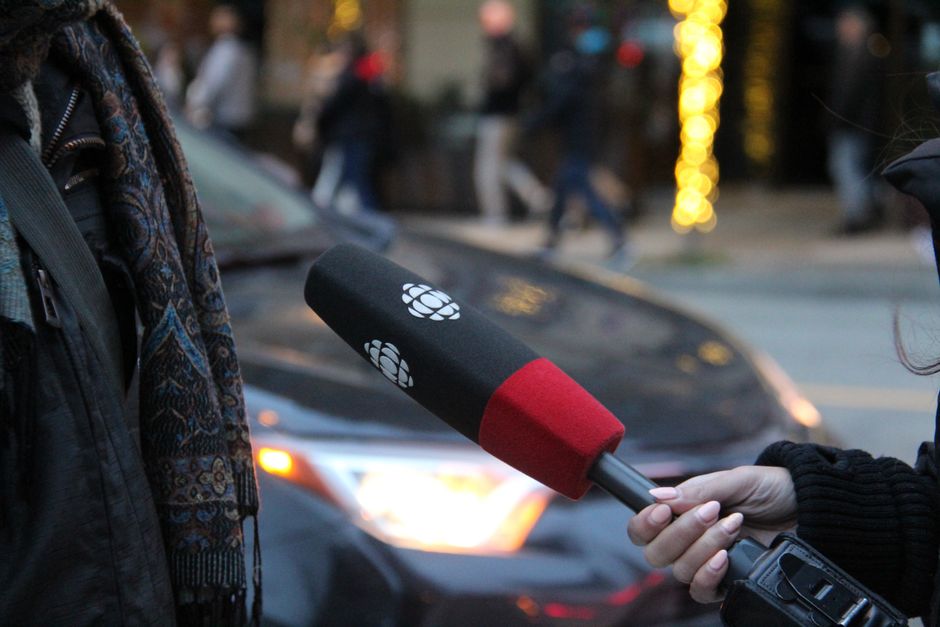
Field Sound Bite Sourcing: Vox Pops, Mobile Audio Rigs, and Technical Sound Isolation
Field Sound Bite Sourcing: Vox Pops, Mobile Audio Rigs, and Technical Sound Isolation While studio-based journalism provides controlled acoustic environments and authoritative institutional debates, field sound bite gathering is the beating pulse of democratic broadcasting. It is in the marketplace, outside the locked factory gates, in the voting queues, and along flood-ravaged riverbanks that jou...
Module 5 • Subtopic 2
Subtopic 3Document Lecture
Studio Interview Production: Multi-Camera Setups, Floor Manager Signals, IFB Earpieces, and Live Guest Dynamics
Studio Interview Production: Multi-Camera Setups, Floor Manager Signals, IFB Earpieces, and Live Guest Dynamics While field reporting captures spontaneous reality, the television studio interview is a highly choreographed theatrical production where technology, editorial intellect, and interpersonal psychology converge. Whether producing a primetime political debate, a Sunday public affairs interv...
Module 5 • Subtopic 3
Subtopic 4Open Access~3 min read
Mid-Semester Case Study & Research Paper
Sign in or enroll to access the full lecture notes and interactive reader.
Module 5 • Subtopic 4•110 characters of authentic academic content
Subtopic 1Document Lecture
The Line Producer and the Rundown: Pacing, Timing, Teases, Blocks, and Back-Timing
The Line Producer and the Rundown: Pacing, Timing, Teases, Blocks, and Back-Timing In the sociology of the broadcast newsroom, if the reporter is the field investigator and the anchor is the public face, the Line Producer (often termed the Rundown Producer or Show Producer) is the master architect and operational pilot of the newscast. A broadcast bulletin is not an accidental sequence of stories;...
Module 6 • Subtopic 1
Subtopic 2Document Lecture
The Master Control Room and Live Studio Gallery: Director, Technical Director, Vision Mixer, and Prompter Operations
The Master Control Room and Live Studio Gallery: Director, Technical Director, Vision Mixer, and Prompter Operations A live television broadcast is an extraordinary feat of real-time industrial and electronic choreography. While the editorial desk writes scripts and shapes news narratives, the physical execution of the live broadcast occurs across two technological epicenters: the Production Contr...
Module 6 • Subtopic 2
Subtopic 3Document Lecture
Breaking News Production Under Pressure: Wire Feeds, Live Cellular Feeds, and Anchor Coordination
Breaking News Production Under Pressure: Wire Feeds, Live Cellular Feeds, and Anchor Coordination There is no greater test of a broadcast news organization than breaking news. When an unscheduled, disruptive event occurs—an aircraft crash, a devastating explosion, an unannounced military coup, or the sudden death of a national leader—routine programming schedules are immediately suspended. Normal...
Module 6 • Subtopic 3
Subtopic 1Document Lecture
The National Broadcasting Commission Act and the NBC Code: Licensing, Sanctions, and Fairness Doctrines
The National Broadcasting Commission Act and the NBC Code: Licensing, Sanctions, and Fairness Doctrines Unlike the print press—which operates primarily under general constitutional protections and common law libel principles—broadcasting is a statutorily regulated industry. Because the electromagnetic radio frequency (RF) spectrum is a scarce, sovereign public resource belonging to the entire citi...
Module 7 • Subtopic 1
Subtopic 2Document Lecture
Broadcast Defamation and Strict Liability: Live Phone-in Broadcast Delays, Profanity Filters, and Transmission Libel
Broadcast Defamation and Strict Liability: Live Phone-in Broadcast Delays, Profanity Filters, and Transmission Libel In the jurisprudence of mass media law, broadcasting occupies a unique and hazardous position regarding civil liability. While the written press allows days or hours for pre-publication copy editing, television and radio transmit real-time speech directly across the airwaves. Live p...
Module 7 • Subtopic 2
Subtopic 3Document Lecture
Electoral Broadcast Guidelines: Equal Time Rules, Political Advertising Moratoriums, and Hate Speech Safeguards
Electoral Broadcast Guidelines: Equal Time Rules, Political Advertising Moratoriums, and Hate Speech Safeguards Elections represent the supreme operational test of a nation's broadcasting system. During electoral campaigns, control over the airwaves becomes the ultimate prize for competing political parties, incumbent executives, and opposition movements. In a constitutional democracy, the broadca...
Module 7 • Subtopic 3
Subtopic 1Document Lecture
Ethics of Disaster and Conflict Visuals: Graphic Violence, Decency, Victim Dignity, and Suicide Coverage Safeguards
Ethics of Disaster and Conflict Visuals: Graphic Violence, Decency, Victim Dignity, and Suicide Coverage Safeguards Television and digital video are visceral mediums. When war, armed insurgency, industrial disasters, or catastrophic transportation accidents occur, visual journalism has the power to shatter complacency, mobilize international humanitarian intervention, and expose crimes against hum...
Module 8 • Subtopic 1
Formative Assessment10 Points • 15 Mins
Comprehensive End-of-Course Examination
Assessment Protocol:10 Total Points•70% Passing Threshold•15 Mins Time Limit•Bloom's Taxonomy: Analyze & Evaluate
Test your knowledge of Broadcast Journalism Ethics
Module 8 • Formative Assessment
Subtopic 3Document Lecture
Commercialization of Broadcast News: News Commercialization ('Let Them Pay' Syndromes) vs Public Service Broadcasting
Commercialization of Broadcast News: News Commercialization ('Let Them Pay' Syndromes) vs Public Service Broadcasting The institutional health of broadcast journalism is directly governed by its political economy. Broadcasting is an immensely capital-intensive enterprise: high-frequency transmitters consume massive megawatts of diesel power, satellite transponders demand multi-million-dollar annua...
Module 8 • Subtopic 3
Subtopic 4Document Lecture
Podcasting, Mobile Journalism (MoJo), and Multiplatform Streaming: The Future of Converged Broadcasting
Podcasting, Mobile Journalism (MoJo), and Multiplatform Streaming: The Future of Converged Broadcasting The traditional boundaries of broadcast journalism—defined for nearly a century by centralized transmitter towers, fixed linear broadcast clocks, and bulky outside broadcast television trucks—have dissolved. We inhabit an era of radical technological convergence, where telecommunications network...
Module 8 • Subtopic 4
Academic Ecosystem & Connected Pathways
Deepen your studies across connected learning pathways in the PAMCET academic network:
Digital Research Library16,000+ open-access monographs & textbooks
Structured Learning PathsCurated multi-course career specializations
WAEC / SSCE Examination HubComplete secondary school syllabus & mock tests
JAMB / UTME PreparationComputer-based tests & scoring analytics
Tertiary & University Hub100L - 400L degree benchmark modules
Credential Verification PortalInstant cryptographic certificate authentication
Instructor
PAMCET Learning Team
Institutional Course Curation · PAMCET
Qualifications:
PAMCET Learning Team — Institutional Course Curation, Digitpen Hub LtdMy Skills:
- Curriculum Curation
- Course Content Review
- Learning Outcome Design
- Course Publishing & Quality Assurance
- Platform Content Operations
Reviews
No reviews available
Free$24.99100% Off
Certificate available separately for $7 after completionCourse Includes
8 Chapters
24 Lectures
1 week
Skill Level intermediate
Taught in English
Lifetime Access
Certification of Completion
Category: University - Mass Communication
Share On
Download Syllabus & Study Guide
Receive the full lecture syllabus, reading list, and milestone schedule for Broadcast Journalism I.
By submitting, you agree to receive educational updates. You can unsubscribe anytime. Read our Privacy Policy.