

The PAMCET Learning Team is the institutional curriculum and content group behind course publishing on this platform. PAMCET (Professional and Academic Management Centre for Education and Training) is operated by Digitpen Hub Ltd, a company registered in Lagos, Nigeria. Courses credited to the PAMCET Learning Team are structured, organized, and published centrally by the platform rather than authored by a single named individual instructor — each course's syllabus, learning outcomes, and content are reviewed before publication under this institutional account. For questions about a specific course or to report a content issue, please use the platform's Help & Support or Contact Us pages.
B.Sc. DegreeFaculty of Faculty of Medical, Health & Clinical SciencesPhysiotherapy
Introduction to Physiotherapy
An introductory course covering fundamental principles of Physiotherapy.

Course Overview
An introductory course covering fundamental principles of Physiotherapy. Curriculum Structure & Core Modules: • 1. Introduction to Introduction to Physiotherapy & Core Frameworks • 2. Theoretical Foundations & Foundational Models of Introduction to Physiotherapy • 3. Advanced...
Degree Programme Curriculum Context
This course is a curriculum unit of the B.Sc. Physiotherapy degree framework in Nigeria.
Earn Your Certificate
Showcase your skills with a certificate! Complete the course, submit your project, and earn your certificate. Here's a sample of what you'll receive to show off your accomplishments.

Lecture Board & Syllabus
Course Curriculum
Browse complete theoretical foundations, worked calculations, laboratory protocols, and board assessment questions under each topic.
8 Chapters
•24 Lecture
•0s
Subtopic 1Document Lecture
Introduction to Introduction to Physiotherapy & Core Frameworks - Concept Explanation & Foundations
Section 1: Detailed Theoretical Foundations & Conceptual Framework The profession of physical therapy emerged dynamically across the late nineteenth and early twentieth centuries, driven by global public health crises, particularly recurring poliomyelitis epidemics and the devastating polytrauma of World War I and World War II. Early European pioneers, notably Per Henrik Ling in Sweden who establi...
Module 1 • Subtopic 1
Subtopic 2Document Lecture
Introduction to Introduction to Physiotherapy & Core Frameworks - Worked Examples & Case Analysis
Section 1: Detailed Theoretical Foundations & Conceptual Framework Kinesiology, the comprehensive study of human movement, synthesizes principles from functional anatomy, physiology, and classical Newtonian mechanics. Within physical therapy, kinesiological analysis is bifurcated into kinematics and kinetics. Kinematics describes the spatial and temporal parameters of motion without regard to the...
Module 1 • Subtopic 2
Subtopic 3Document Lecture
Introduction to Introduction to Physiotherapy & Core Frameworks - Practice Questions & Exercises
Section 1: Detailed Theoretical Foundations & Conceptual Framework Goniometry, derived from the Greek terms gonia (angle) and metron (measure), is the foundational clinical measurement science used in physical therapy to quantify joint angle positions and total active and passive range of motion (ROM). Accurate goniometric assessment forms the baseline for clinical diagnosis, therapeutic progressi...
Module 1 • Subtopic 3
Subtopic 1Document Lecture
Theoretical Foundations & Foundational Models of Introduction to Physiotherapy - Concept Explanation & Foundations
Section 1: Detailed Theoretical Foundations & Conceptual Framework Manual Muscle Testing (MMT) is an indispensable clinical assessment methodology utilized by physical therapists to evaluate the voluntary contractile strength of specific muscle groups and individual muscles. Developed in the early twentieth century by Robert Lovett and refined extensively by Florence Kendall, Henry Kendall, and Lu...
Module 2 • Subtopic 1
Subtopic 2Document Lecture
Theoretical Foundations & Foundational Models of Introduction to Physiotherapy - Worked Examples & Case Analysis
Section 1: Detailed Theoretical Foundations & Conceptual Framework Postural control represents the foundational neuromusculoskeletal capacity to maintain, achieve, or restore an optimal state of balance during any static posture or dynamic activity. Human bipedal stance is intrinsically unstable: approximately two-thirds of total body mass is situated high above the ground at the level of the pelv...
Module 2 • Subtopic 2
Subtopic 3Document Lecture
Theoretical Foundations & Foundational Models of Introduction to Physiotherapy - Practice Questions & Exercises
Section 1: Detailed Theoretical Foundations & Conceptual Framework Therapeutic exercise constitutes the primary, non-pharmacological cornerstone of physical therapy intervention. Unlike generalized fitness training, therapeutic exercise involves the systematic, planned performance of bodily movements, postures, or physical activities intended to remediate or prevent impairments of body functions a...
Module 2 • Subtopic 3
Subtopic 1Document Lecture
Advanced Concepts, Variables & Mechanics - Concept Explanation & Foundations
Section 1: Detailed Theoretical Foundations & Conceptual Framework Thermal agents represent classical physical modalities widely utilized within physical therapy to modulate tissue temperature, alter metabolic and enzymatic activity, manage pain, and modify viscoelastic properties of musculoskeletal connective tissues. Biophysically, heat transfer between therapeutic modalities and human biologica...
Module 3 • Subtopic 1
Subtopic 2Document Lecture
Advanced Concepts, Variables & Mechanics - Worked Examples & Case Analysis
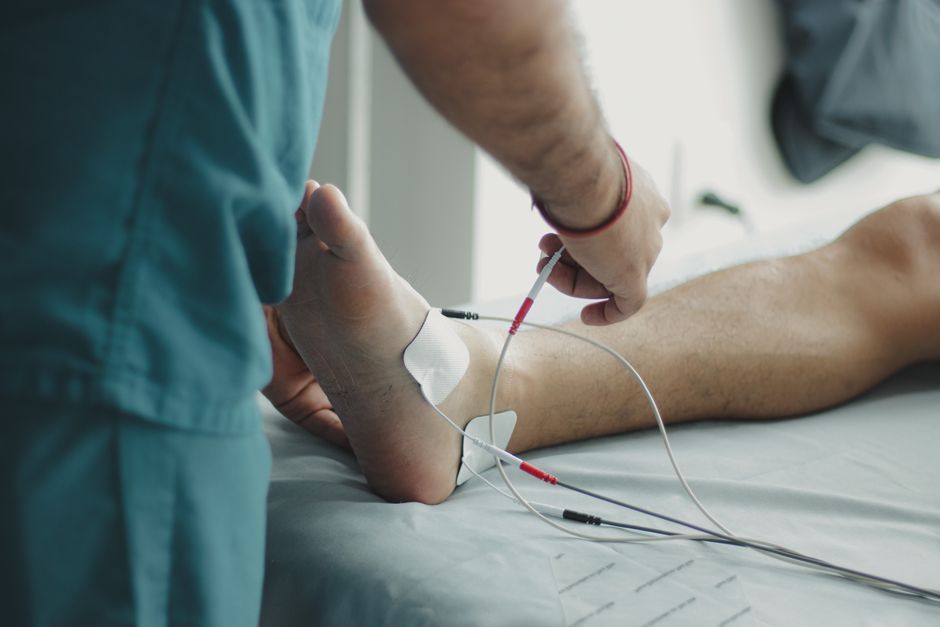
Section 1: Detailed Theoretical Foundations & Conceptual Framework Electrotherapeutic modalities utilize controlled external electrical currents delivered across transcutaneous electrode interfaces to stimulate biological excitable membranes (peripheral sensory nerves, motor axons, and denervated muscle fibers). Clinical electrotherapy is bifurcated into two primary physiological objectives: elect...
Module 3 • Subtopic 2
Subtopic 3Document Lecture
Advanced Concepts, Variables & Mechanics - Practice Questions & Exercises
Section 1: Detailed Theoretical Foundations & Conceptual Framework Therapeutic ultrasound and Extracorporeal Shockwave Therapy (ESWT) represent acoustic biophysical modalities utilized in physical therapy to induce mechanical and thermal biological effects at deep musculoskeletal tissue interfaces. Therapeutic ultrasound utilizes high-frequency acoustic pressure waves (typically 1.0 to 3.3 MHz), s...
Module 3 • Subtopic 3
Subtopic 1Document Lecture
Methodological Approaches & System Analysis - Concept Explanation & Foundations
Section 1: Detailed Theoretical Foundations & Conceptual Framework Observational and quantitative instrumental gait analysis represents one of the most critical diagnostic capabilities in physical therapy, bridging kinesiology, neurophysiology, and biomechanics. A single human gait cycle (stride) is defined as the sequence of events occurring between the initial contact of one foot with the ground...
Module 4 • Subtopic 1
Subtopic 2Document Lecture
Methodological Approaches & System Analysis - Worked Examples & Case Analysis
Section 1: Detailed Theoretical Foundations & Conceptual Framework Motor control explores the neural, physical, and behavioral mechanisms underlying human posture and movement, while motor learning investigates how motor skills are acquired, retained, and generalized through practice, feedback, and experience. Within neurological physical therapy, understanding motor control theories guides clinic...
Module 4 • Subtopic 2
Subtopic 3Document Lecture
Methodological Approaches & System Analysis - Practice Questions & Exercises
Section 1: Detailed Theoretical Foundations & Conceptual Framework Manual physical therapy encompasses specialized skilled hand-applied techniques designed to modulate pain, increase joint range of motion, induce muscle relaxation, improve tissue extensibility, and restore physiological and accessory arthrokinematics. Manual interventions target both inert articular structures (synovial joints, ca...
Module 4 • Subtopic 3
Subtopic 1Document Lecture
Analytical Case Studies & Research Applications - Concept Explanation & Foundations
Section 1: Detailed Theoretical Foundations & Conceptual Framework Musculoskeletal rehabilitation requires a profound biological comprehension of soft tissue healing cascades and tendon pathology. Collagenous connective tissues (tendons, ligaments, and joint capsules) undergo a stereotypic, three-phase biological repair response following acute mechanical trauma: Inflammatory Phase (Days 0 to 5):...
Module 5 • Subtopic 1
Subtopic 2Document Lecture
Analytical Case Studies & Research Applications - Worked Examples & Case Analysis
Section 1: Detailed Theoretical Foundations & Conceptual Framework Neurological physical therapy addresses the profound functional and sensorimotor impairments resulting from damage to the central and peripheral nervous systems. Clinicians manage three primary neuropathological conditions: Cerebrovascular Accidents (Stroke), Spinal Cord Injury (SCI), and Parkinson's Disease (PD). Differential diag...
Module 5 • Subtopic 2
Subtopic 3Document Lecture
Analytical Case Studies & Research Applications - Practice Questions & Exercises
Section 1: Detailed Theoretical Foundations & Conceptual Framework Cardiopulmonary physical therapy addresses the evaluation, prevention, and treatment of acute and chronic disorders affecting the cardiovascular and respiratory systems. In acute inpatient care, intensive care units (ICU), and outpatient pulmonary rehabilitation, physical therapists utilize evidence-based modalities to optimize alv...
Module 5 • Subtopic 3
Subtopic 4Open Access~3 min read
Mid-Semester Case Study & Research Paper
Sign in or enroll to access the full lecture notes and interactive reader.
Module 5 • Subtopic 4•117 characters of authentic academic content
Subtopic 1Document Lecture
Strategic Implementation & Policy Implications - Concept Explanation & Foundations
Section 1: Detailed Theoretical Foundations & Conceptual Framework Pediatric physical therapy addresses the unique neuromusculoskeletal, cardiopulmonary, and developmental needs of infants, children, and adolescents. Motor development is not a passive, hardwired unfolding of genetic instructions, but rather an active, dynamic process governed by the continuous interaction of developing biological...
Module 6 • Subtopic 1
Subtopic 2Document Lecture
Strategic Implementation & Policy Implications - Worked Examples & Case Analysis
Section 1: Detailed Theoretical Foundations & Conceptual Framework Geriatric physical therapy is a specialized domain of clinical practice focusing on the complex interplay between primary physiological aging (senescence), secondary pathological disease states, disuse deconditioning, and social determinants of health in older adults. A central clinical objective is mitigating the catastrophic casc...
Module 6 • Subtopic 2
Subtopic 3Document Lecture
Strategic Implementation & Policy Implications - Practice Questions & Exercises
Section 1: Detailed Theoretical Foundations & Conceptual Framework Sports physical therapy represents the specialized domain dedicated to athletic injury prevention, acute sideline trauma triage, biomechanical movement optimization, and safe Return to Sport (RTS) decision-making. Among athletic injuries, rupture of the Anterior Cruciate Ligament (ACL) is one of the most physically and economically...
Module 6 • Subtopic 3
Subtopic 1Document Lecture
Comparative Perspectives & Modern Theories of Introduction to Physiotherapy - Concept Explanation & Foundations
Section 1: Detailed Theoretical Foundations & Conceptual Framework Pain science has undergone a revolutionary paradigm shift over the past three decades, transforming physical therapy from a Cartesian tissue-damage model into a comprehensive biopsychosocial neurobiology. Historically, René Descartes conceptualized pain as a linear, hardwired alarm system: mechanical tissue injury pulls a biologica...
Module 7 • Subtopic 1
Subtopic 2Document Lecture
Comparative Perspectives & Modern Theories of Introduction to Physiotherapy - Worked Examples & Case Analysis
Section 1: Detailed Theoretical Foundations & Conceptual Framework Vestibular Rehabilitation Therapy (VRT) is an evidence-based, specialized domain within physical therapy designed to address gaze instability, motion intolerance, dizziness, and postural imbalance resulting from peripheral and central vestibular pathologies. The peripheral vestibular apparatus situated within the petrous portion of...
Module 7 • Subtopic 2
Subtopic 3Document Lecture
Comparative Perspectives & Modern Theories of Introduction to Physiotherapy - Practice Questions & Exercises
Section 1: Detailed Theoretical Foundations & Conceptual Framework Evidence-Based Practice (EBP) is the foundational methodological paradigm underpinning modern physical therapy. David Sackett famously codified EBP as "the conscientious, explicit, and judicious use of current best evidence in making decisions about the care of individual patients." In clinical physical therapy, EBP is conceptualiz...
Module 7 • Subtopic 3
Subtopic 1Document Lecture
Synthesis, Future Trends & Final Review - Concept Explanation & Foundations
Section 1: Detailed Theoretical Foundations & Conceptual Framework Clinical ethics, jurisprudence, and professional standards govern the moral duties, legal boundaries, and societal responsibilities of physical therapists. As an autonomous, primary-contact health profession characterized by direct patient access in modern healthcare jurisdictions, physical therapy requires sophisticated ethical de...
Module 8 • Subtopic 1
Subtopic 2Document Lecture
Synthesis, Future Trends & Final Review - Worked Examples & Case Analysis
Section 1: Detailed Theoretical Foundations & Conceptual Framework Telerehabilitation and digital physical therapy represent the modern technological frontier of physical therapy practice, leveraging telecommunications, wearable biomedical sensors, virtual reality, and artificial intelligence to deliver remote clinical examination, therapeutic exercise monitoring, and neurorehabilitation. Telereha...
Module 8 • Subtopic 2
Subtopic 3Document Lecture
Synthesis, Future Trends & Final Review - Practice Questions & Exercises
Section 1: Detailed Theoretical Foundations & Conceptual Framework Clinical reasoning represents the cognitive foundation upon which all physical therapy examination, diagnostic categorization, prognostic estimation, and therapeutic intervention depend. Mark Jones and Joy Higgs define clinical reasoning in health professions as "a context-dependent, thinking and decision-making process involving t...
Module 8 • Subtopic 3
Academic Ecosystem & Connected Pathways
Deepen your studies across connected learning pathways in the PAMCET academic network:
Digital Research Library16,000+ open-access monographs & textbooks
Structured Learning PathsCurated multi-course career specializations
WAEC / SSCE Examination HubComplete secondary school syllabus & mock tests
JAMB / UTME PreparationComputer-based tests & scoring analytics
Tertiary & University Hub100L - 400L degree benchmark modules
Credential Verification PortalInstant cryptographic certificate authentication
Instructor
PAMCET Learning Team
Institutional Course Curation · PAMCET
Qualifications:
PAMCET Learning Team — Institutional Course Curation, Digitpen Hub LtdMy Skills:
- Curriculum Curation
- Course Content Review
- Learning Outcome Design
- Course Publishing & Quality Assurance
- Platform Content Operations
Reviews
No reviews available
Free100% Off
Certificate available separately for $7 after completionCourse Includes
8 Chapters
24 Lectures
1 week
Skill Level beginner
Taught in English
Lifetime Access
Certification of Completion
Category: University - Physiotherapy
Share On
Download Syllabus & Study Guide
Receive the full lecture syllabus, reading list, and milestone schedule for Introduction to Physiotherapy.
By submitting, you agree to receive educational updates. You can unsubscribe anytime. Read our Privacy Policy.